384 Well Assay Plates
Glass coated plates
Hydrophobic compounds? Get it glass coated.
A silicon dioxide coating gives every well a glass contact surface, so hydrophobic compounds touch glass, not plastic. Available across our plate formats.

384 Well Assay Plate, Polystyrene, Clear Bottom, Black, TC-Treated, Sterile, 4 × 25 HTS Sleeves
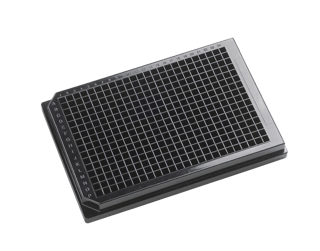
384 Well Assay Plate, Polystyrene, Clear Bottom, Black, TC-Treated, Sterile, Individually Packaged

384 Well Assay Plate, Polystyrene, Clear Bottom, White
384 Well Assay Plate, Polystyrene, Clear Bottom, White, TC-Treated, Sterile, 4 × 25 HTS Sleeves
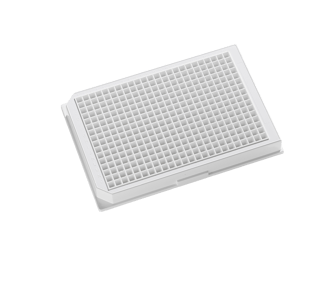
384 Well Assay Plate, Polystyrene, Clear Bottom, White, TC-Treated, Sterile, Individually Packaged

384 Well Round Low-Volume Assay Plate, 30 µL, Polystyrene, Solid, Black

384 Well Round Low-Volume Assay Plate, 30 µL, Polystyrene, Solid, Clear

384 Well Round Low-Volume Assay Plate, 30 µL, Polystyrene, Solid, White

384 Well Square Assay Plate, 120 µL, Polystyrene, Solid, Black

384 Well Square Assay Plate, 120 µL, Polystyrene, Solid, Clear

384 Well Square Assay Plate, 120 µL, Polystyrene, Solid, White
384-well polystyrene assay plates for high-throughput screening, ELISA, and fluorescence, luminescence and absorbance reads. Square-well plates hold 120 µL per well; round low-volume plates hold 30 µL to save reagent in miniaturized assays.
Pick the plate color for your detection method. Clear plates suit absorbance and colorimetric assays, black plates cut background and crosstalk for fluorescence, and white plates reflect light to maximize luminescence signal. Clear-bottom versions let you image cells or read from below.
All plates use the standard SBS/ANSI footprint and 384-well layout, so they work in plate readers, washers and liquid handlers from all major makers. For storage and compound plates in polypropylene, see 384-well polypropylene plates. Not sure which plate fits your assay? The Microplate Guide recommends one in four questions.